
Vehicle restraint systems: safety with environmental awareness
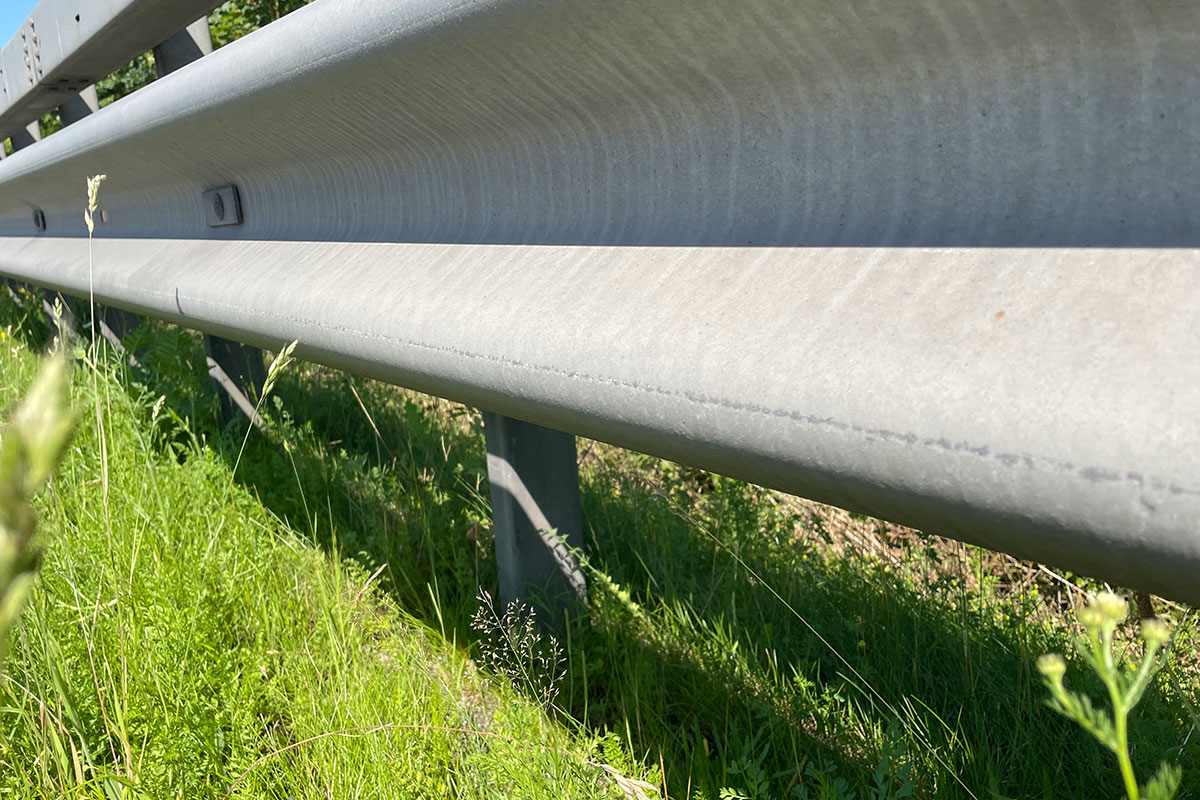
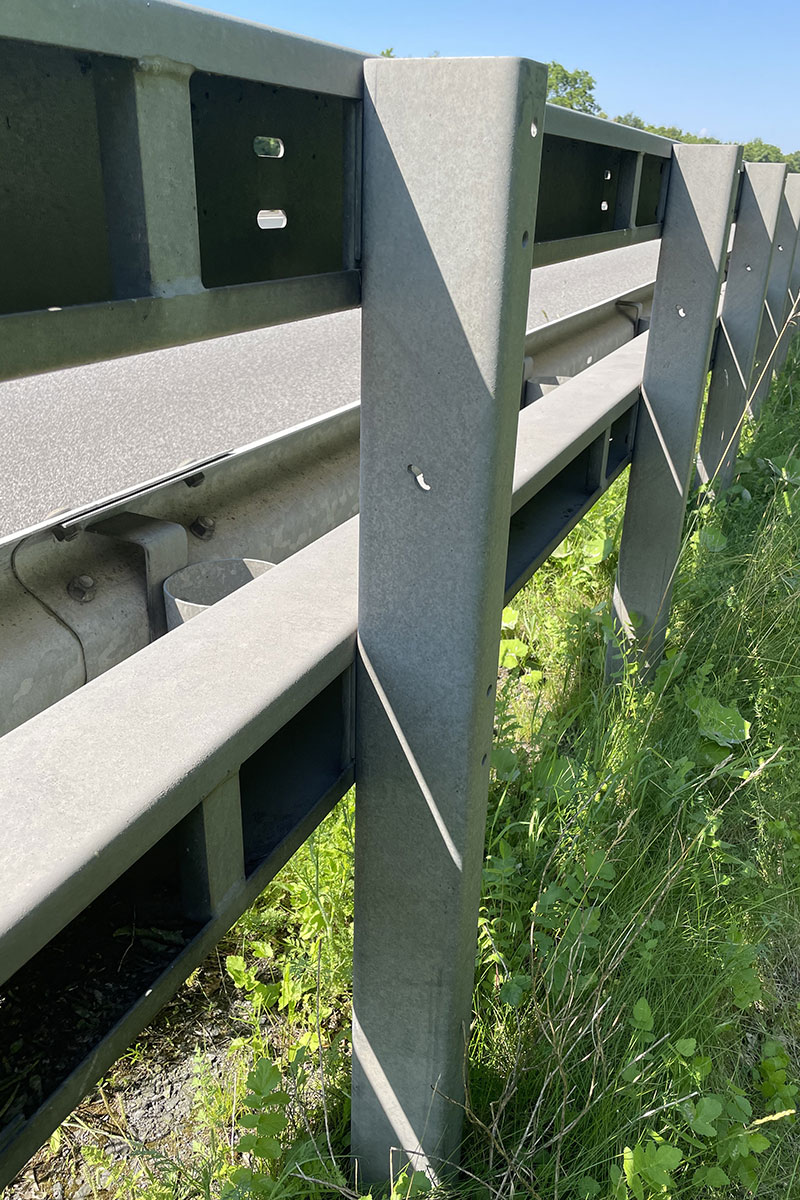
To protect moving traffic, steel vehicle restraint systems consisting of guardrails, posts and box-beam systems have shaped the appearance of roads in Germany for many decades. Traditional batch hot-dip galvanising provides robust corrosion protection, ensuring the necessary durability of the components. On a 200 m test section in the Eifel region along the A 48 federal motorway, a vehicle restraint system galvanised with microZINQ has also been withstanding the weather conditions caused by both atmospheric and traffic-related loads for 15 years now.
Zinc and steel score points with their recyclability as an increasingly important aspect of sustainability. Both metals can be easily separated and recycled. But the processing and reuse of used parts is also possible through stripping and re-galvanising, thereby saving the resources that would otherwise be required for the manufacture of new steel components. You can read exactly how this works for steel safety barriers here.
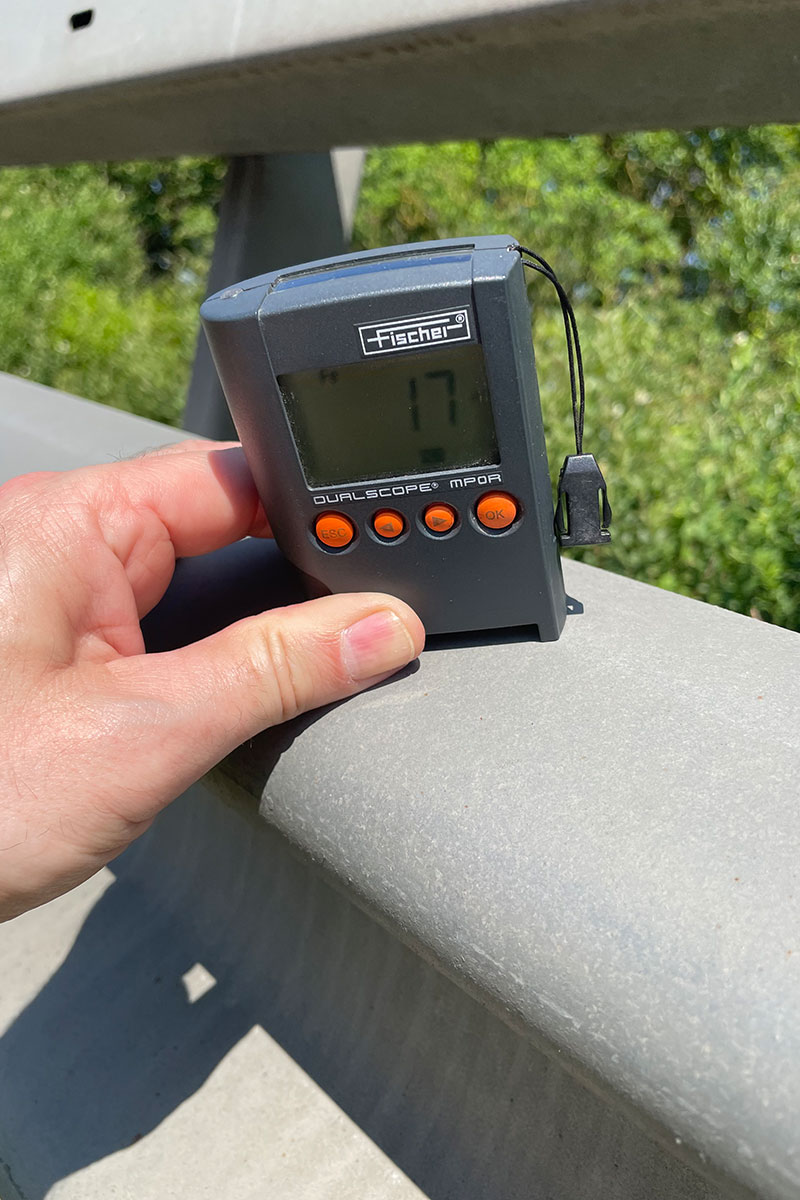
In addition to the effectiveness of the corrosion protection, efficiency is also of interest in the field of vehicle restraint systems. To this end, ZINQ is testing microZINQ—a thin-layer batch hot-dip galvanising process recognised for its resource efficiency—in a long-term trial: in 2009, the components of the vehicle restraint system along a 200 m test section of the A48 federal motorway were coated with the significantly thinner zinc-aluminium galvanising process microZINQ instead of traditional duroZINQ batch hot-dip galvanising. The most recent inspection shows that even after 15 years, the thin, resource-efficient corrosion protection layers remain fully effective and show no signs of wear. These results are confirmed within the framework of the research project P918 'Proof of equivalence of novel corrosion protection coatings for steel safety barriers', which was conducted between 2011 and 2022 by the Steel Application Research Association (FOSTA). As part of this, microZINQ was tested as one of various corrosion protection systems for steel vehicle restraint systems, including in real-world application at two motorway locations (BAB 45 and BAB 61).
All in all, it should be noted that surface finishing à la ZINQ not only contributes to a safe environment, but also makes a positive contribution to protecting our environment in terms of its longevity, corrosion resistance and sustainability.






 Deutsch
  English (UK)
  Polski
  Nederlands (België)
  Français de Belgique