
Traffic restraint systems: microZINQ® in a ten-year practical test
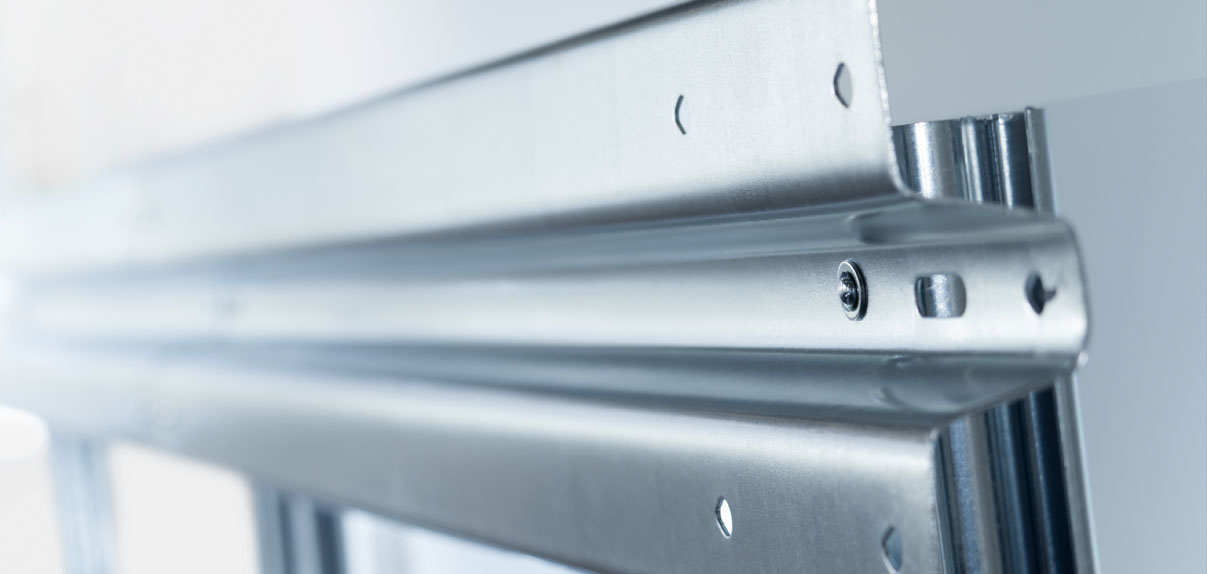
Expensive investments or complex repairs are not necessary – with batch galvanising, there is a very effective process for protecting steel from corrosion for decades. However, users in the automotive sector could not use the process as, despite its superior corrosion protection properties, it did not meet the requirements in other functional areas. These include, among others, ductility, weight, or formability. The thin-film batch galvanising process microZINQ, which was brought to series production and introduced to the market in 2004, emerged from a joint development project with a car manufacturer. Its introduction to the entire market of the metal-processing industry took place with the capacity expansion in 2015 at the microZINQ site in Hagen (with support from the state of North Rhine-Westphalia and the European Union from the European Regional Development Fund amounting to approx. €1.7 million, among others). The very high resistance of the zinc-aluminium layer (Zn5Al), already known from previous applications, could now be confirmed once again through a long-term test with steel crash barriers.
In May 2009, a test track approximately 150 metres long on the A48 motorway was fitted with a microZINQ galvanised safety barrier system, and the components have been regularly inspected since then. After 10 years of practical testing under typical stresses such as stone chipping and exposure to de-icing salt, the following interim conclusion was reached in spring 2019:
- Looking at the general optical appearance, all components, just like in previous years, have a uniformly matt light grey appearance.
- All components along the entire route are in very good condition.
- There are no rusty spots.
- The zinc layer covers all edges and is undamaged.
- No zinc loss has been detected over the ten years. The (allegedly) determined increase in zinc layer thickness of an average of 1.3 µm is explainable against the background of reaction and deposition products forming.
„Our results are fully in line with the findings from a long-term study by the Federal Highway Research Institute (BASt), which examined coil-galvanised material with zinc and Zn5Al coatings. The coatings behave identically, regardless of the galvanising process. However, hot-dip galvanising offers the advantage of a completely closed zinc coating, unlike coil galvanising, where uncoated cut and punched edges are present due to manufacturing processes., So, Dr. Thomas Pinger, Head of Research and Development at ZINQ.
„With regard to the urgently required investments in infrastructure, where, according to the current draft of the German federal government's Climate Protection Act, the public sector is to take on a pioneering role and environmental impact over the entire service life will play a decisive role, microZINQ thus offers an excellent, long-term proven solution for the corrosion protection of steel parts on and along roads.“
The full technical article „Long-term experience with thin-film zinc-plated traffic restraint systems in trials under real conditions“ by Dr. Thomas Pinger can be found here.





 Deutsch
  English (UK)
  Polski
  Nederlands (België)
  Français de Belgique