
30 years in the museum, soon in the museum garden: the stainless steel grating, which once served as support walls for exhibition panels in the Haus der History in Bonn, are getting a second life as stools, benches, lounge chairs, tables or shelving. What others would have disposed of, Cologne metal designer Anna Sänger has rethought and inspired an entire network to join in, including ZINQ.
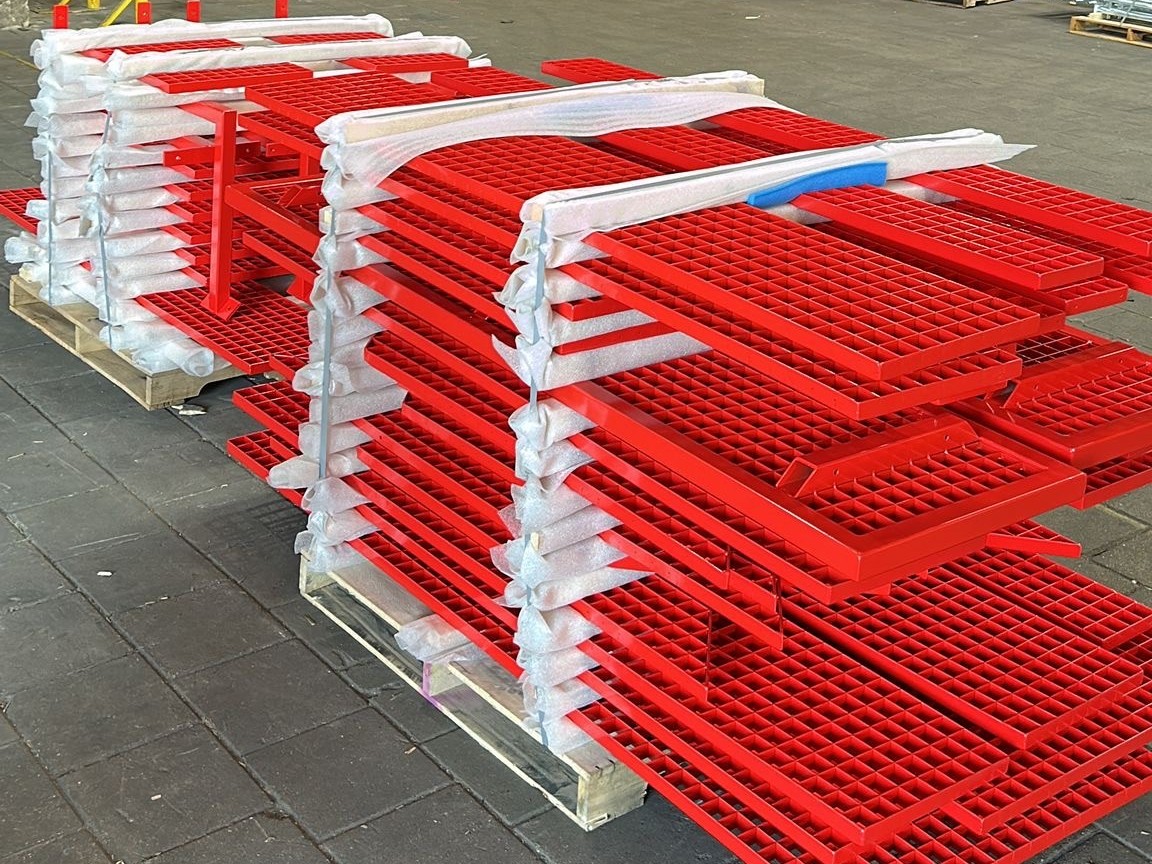
Together with students from the Carl-Reuther-Berufskolleg Hennef, she used the disused grating to develop 52 new pieces of furniture for the museum garden. A concrete example of practical reuse: existing material is repurposed and given a new artisanal interpretation. The project is supplemented by the Erasmus+ programme, which facilitates international exchange and the active involvement of the young people. The transport of the finished furniture was handled by Thomas Eisenhandel GmbH.
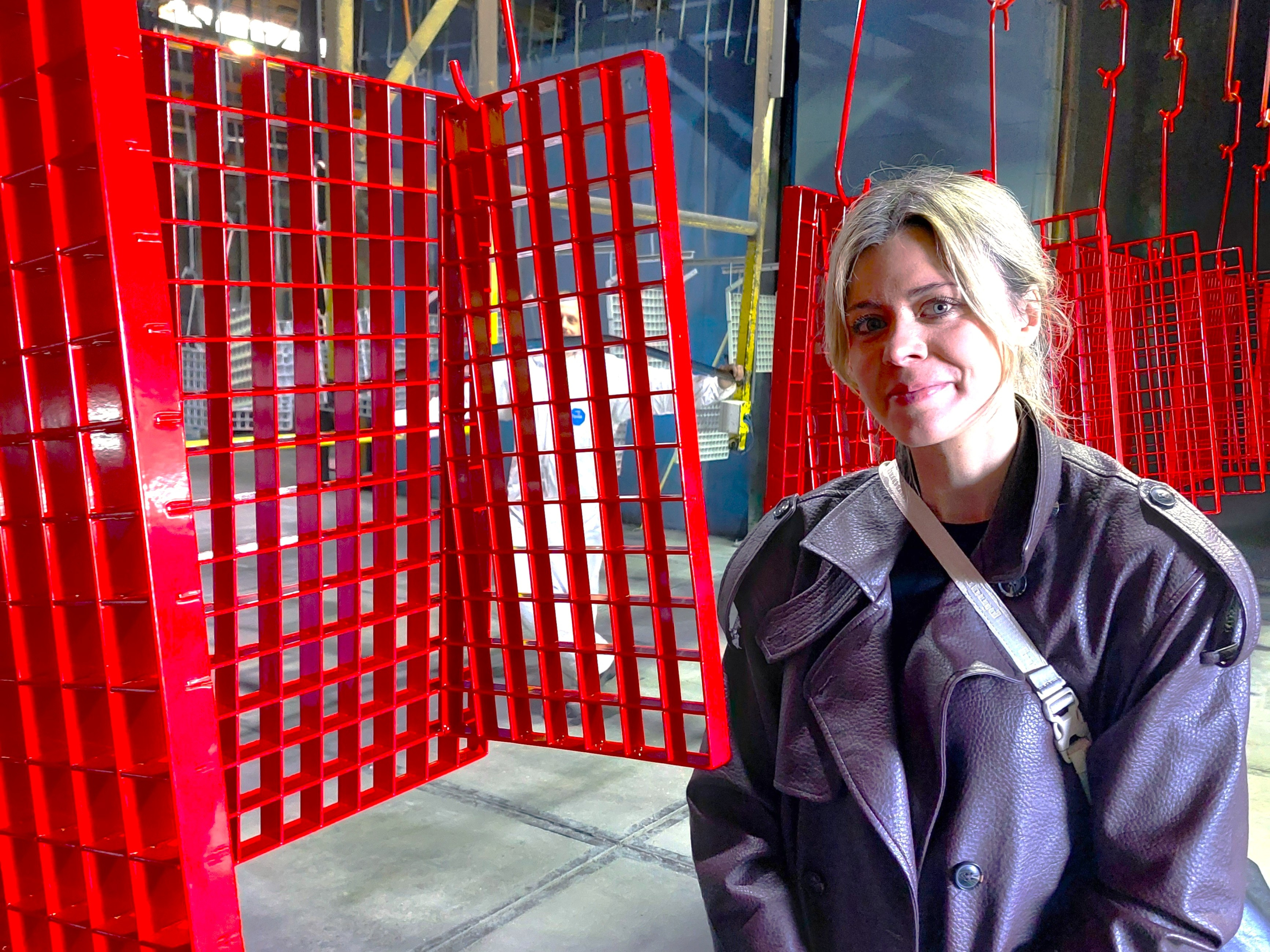
For the powder coating, ZINQ came into play. In mid-April, the furniture was taken to the coating plant in Veenoord in the Netherlands. A ZINQ team led teachers, a school class and the metal designer through the plant and laid out the individual components side by side through all the processing stages: from the raw state through blasting and priming to the finished powder coating and finally fresh out of the oven.
„I'm still totally fascinated by how great it's all turned out,“ says Anna Sänger. „You can hardly imagine that the grilles are actually over 30 years old. Thanks to the professional coating by ZINQ, they look like new. For me, that's precisely what's special about metal: the recycling rate is extremely high and the material remains stable for decades. Compared to wood, it simply demonstrates a different form of longevity. When you add such a clean, fast and professional coating application to that, old material is transformed into something that feels completely new again.“
Following their return from the Netherlands, the finished furniture was taken directly to the Haus der Geschichte in Bonn. For the opening of the new museum garden in June, they will be on public display there for the first time, as furniture that literally has history.
For ZINQ, this project is a successful example of practised reuse: not producing anew for the sake of producing, but rethinking what is already there.




 ZINQ
ZINQ
 Deutsch
  English (UK)
  Polski
  Nederlands (België)
  Français de Belgique